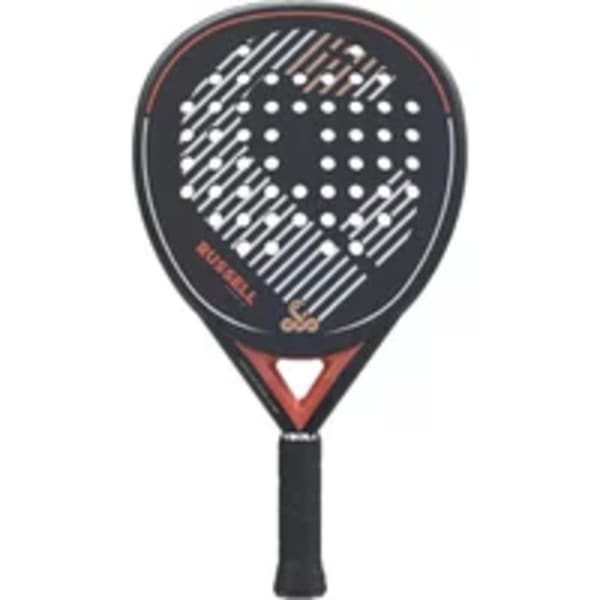
Vibora Russell Classic Fiber
✓Cross-checked with official data from Viborahow we score
PADELTESTLAB SCORE
0-100 scale
78/100
Description
Who this racket is for
Pros
- ✓The glass fibre face over the Soft EVA core sends the ball back almost effortlessly: on long wall exits and defensive lobs you barely need to load your arm to reach the back of the court The wide sweet spot of the teardrop shape forgives off-centre contact: rushed hip-height volleys still come out with direction instead of dying in the net The medium balance keeps the mass close to your hand and lets you get the racket overhead in time for the bandeja, even when your opponent's lob has already won two steps on you The glass fibre's flex soaks up the impact before it reaches your elbow, a real plus if you're playing three or four hours a week and dealing with tennis-elbow-type niggles The surface still grips enough to add cut on the bandeja and slide the bounce toward the back glass without the ball skidding off the face
Cons
- ✗On a flat smash off the lob (remate por 3) the soft rubber soaks up energy instead of firing it back crisp: your whole arm has to generate the acceleration, and the kick off the court comes out less aggressive The soft feel blurs the feedback in your hand; fine-tuning a vibora into the body is hard to repeat shot after shot with the same feel Against heavy incoming balls the face flexes too much and smash returns fall short of the mid-court more often than you'd like If you already close out points from the net regularly, the Russell Classic Fiber will start feeling short within a season or two
PADELTESTLAB SCORE
0-100 scale
78/100
Out of stock right now
None of the shops we track has it in stock right now. We last saw it on August 1 at €87.73.
See similar rackets in stockGlass fibre face, Soft EVA core, teardrop shape and medium balance: the Vibor-A Russell Classic Fiber tells you exactly who it's for right from the spec sheet. It sits in Vibor-A's Classic line, the brand's entry-level range, with a reference price around €109.90.
Why the glass fibre face changes what you feel in your hand
A glass fibre face is noticeably more flexible than any carbon weave. It deforms on impact, stores energy, then releases it as the ball leaves the face.
The practical effect is twofold. First, the ball comes off with depth even when the shot isn't perfectly timed — exactly what you want when you've been playing six months and still haven't synced your step-in with the point of contact.
Second, the impact reaches your arm filtered. That dampening is why this Vibor-A racket makes sense for anyone putting in several hours a week while nursing elbow or shoulder issues.
The Soft EVA core pushes in the same direction. A soft rubber takes longer to compress and longer to spring back, which stretches the contact time and adds to the sense that the ball sits on the face before it exits.
What level is the Vibor-A Russell Classic Fiber built for?
The Vibor-A Russell Classic Fiber is built for beginners and lower-intermediate players who still build the point from the back of the court. The combination of glass fibre face, soft rubber and medium balance is all about fast adaptation and forgiving mishits over outright finishing power. This isn't a padel racket for someone who already closes points out consistently.
Russell Classic Fiber specs
| Spec | Value |
|---|---|
| Shape | Teardrop (hybrid round-teardrop profile) |
| Balance | Medium |
| Face | Glass fibre |
| Core | Soft EVA |
| Playstyle | Control |
| Level | Beginner |
| Range | Classic line |
| Reference price | €109.90 |
Shot by shot: where it delivers and where it hits a ceiling
Wall exit. Its best terrain. The ball comes off high and deep without needing extra acceleration, so you can recover position while the racket does the work of sending the lob deep.
Bandeja. The teardrop shape and medium balance get overhead quickly. There's enough grip to add cut and push the bounce toward the back glass, though it doesn't bite the ball the way a rough carbon face does.
Volley. The wide sweet spot bails you out on off-centre contact. Rushed hip-height volleys still come out with direction instead of falling short.
Smash off the lob and flat smash. This is where the ceiling shows. The soft rubber absorbs some of the energy you generate instead of firing it back crisp, so the whole arm has to provide the acceleration. The smashes go in, but without the kick that separates a winner from an easy return.
Vibora. Playable, but the soft feel blurs the feedback on exactly where the ball made contact. Fine-tuning a vibora into the body is hard to repeat shot after shot.
Control racket or power racket?
This is a control-oriented racket with a balanced profile that doesn't punish players looking for depth. The hybrid round/teardrop shape centres the sweet spot enough that it doesn't demand pinpoint contact, and the medium balance keeps the mass close to your hand.
That means control in the sense of the ball going in and heading where you aim it — not the surgical precision of a high-end frame. That distinction matters: with this racket you'll miss less, but you won't be dropping the ball ten centimetres from the back glass.
Who it suits and the ideal doubles partner
- A player with under two years on court who wins points through consistency, not finishing.
- A weekend player with a history of elbow trouble who needs to cut impact load without giving up depth.
- Someone returning from a long layoff who wants to rebuild feel before stepping up to a denser core.
On court, the natural partner is someone with a more aggressive racket who takes on the finishing while you sustain the rally from the back and step up when the moment calls for it. If both players are on soft setups, points drag on and the match turns into a war of attrition.
Verdict: how long will it last you
The Russell Classic Fiber delivers on what its build promises: quick to get comfortable with, forgiving on mishits, and easy on the arm. As a first racket or a training racket, the case holds up well.
The limit is a matter of time. If you progress at a decent pace and start closing points out at the net, within a season or two you'll notice the soft rubber holding you back on the smash and you'll miss having more feedback in your hand. That's the moment to look toward a denser core and a carbon face — not before.
Paying €109.90 for a glass fibre racket isn't a bargain, but it's fair value for entry-level gear.
In the brand's lineup
Within vibora's lineup, the russell classic fiber positions itself as a distinctive alternative. At 78/100, it serves its purpose, though there are stronger alternatives on the market.
Frequently asked questions
Who is the Vibora Russell Classic Fiber for?
The Vibora Russell Classic Fiber is built for beginner level: easy to handle and forgiving. Not the ideal pick if you already have consolidated technique.
What's the Vibora Russell Classic Fiber's PadelTestLab score?
The Vibora Russell Classic Fiber scores 78/100 in our review, based on power, hardness, control, maneuverability, ball exit, sweet spot and surface roughness.
Similar alternatives
Other rackets with a similar profile and price range: