
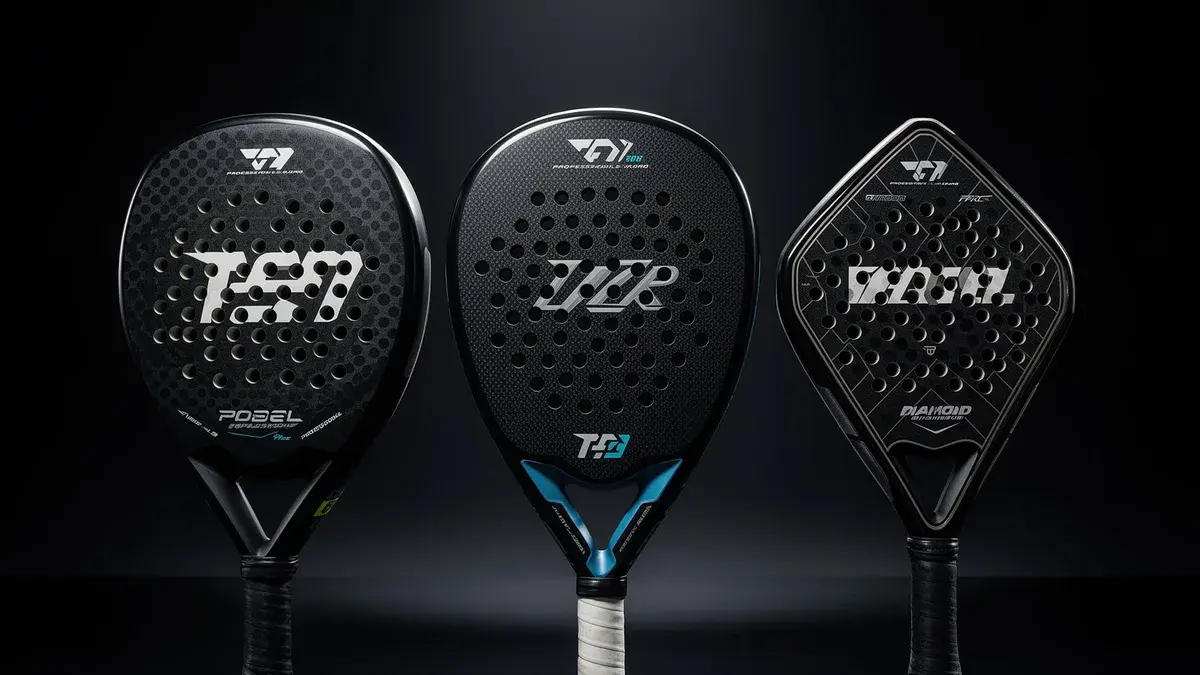
If you've only been playing for a few weeks or you're about to buy your first padel racket, the worst thing you can do is copy your court partner who has been playing for three years. The best padel rackets for beginners in 2026 share the same DNA: round shape, low balance, soft or medium hardness, and a generous sweet spot that forgives mistakes.
In this guide we've picked rackets designed for someone who's still learning. You won't find Galán's or Tapia's paddle here: those are competition tools that will hold your progress back and, given enough time, can lead to elbow problems.
Note: some links are affiliate links. They don't affect the price you pay or our editorial verdict.
⚡ Quick summary
What you actually need in a beginner racket
1. Round shape
Round shapes concentrate the sweet spot in the centre of the racket face. That means when you mishit (which you will, a lot, in the first months), the racket forgives you and the ball still flies with reasonable direction. Diamond and teardrop shapes demand a clean strike that, at this level, you don't have yet.
2. Low balance
Low balance — weight concentrated near the grip — makes the racket easier to manoeuvre. It helps you get into position on time, particularly in the early months when the ball "arrives sooner than expected". High-balance rackets add power but they get there late.
3. Soft or medium core
A soft racket returns more ball with less effort. Beginners don't need to generate power: the racket does it for them. Soft cores are also gentler on the arm — critical for avoiding tennis elbow, the number-one enemy of enthusiastic newcomers.
4. Weight between 360 and 370 grams
Too light (≤355g) and the ball pushes the racket. Too heavy (≥375g) and you'll fatigue before the match is over, losing technique with every game. The beginner sweet spot is 360-370g.
5. Wide sweet spot
All of the above translates into a wide sweet spot: the area of the face where the ball flies "well" even if your contact isn't perfect. That's what you'll be using most for the first six months.
What to avoid at all costs
- Pro paddles. Anything ending in "Pro", "Hack 04", "Metalbone" or signed by a top-10 player is built for athletes who hit smashes at 100km/h. It will frustrate you.
- Cheap unknown-brand rackets. Below £60-£70 it's rare to find decent materials. Better to wait and grab a solid mid-range model on sale.
- Diamond shape. High balance and a small sweet spot are the opposite of what you need.
- Extreme weights. Neither 345g ("light, for women" — a myth) nor 385g ("for hitting hard"). Technique needs to grow, not raw strength.
- Used rackets without testing. A racket with six months of intense use by a stronger player is at the end of its useful life for you. If you go second-hand, test it first.
Recommendations by budget
Under £100: your first racket
You don't need to spend more for a first paddle. Look for versatile models from established brands on previous-season discount. The Bullpadel Neuron 02 Edge on sale, or similar models from Siux, Star Vie or Wilson, fit the brief perfectly.
Filter the beginner ranking by price and check the daily deals page before deciding.
£100-£150: the smart investment
If you play twice a week or more and you can already tell padel has hooked you, this bracket is the most sensible. The Siux Electra Pro Shadow Red stands out: versatile but with a wide sweet spot, perfect for accompanying your progress from beginner to intermediate without needing a second racket within 12 months.
Also browse the control rackets ranking: most are excellent for beginners and will outlast your learning phase.
£150-£200: only if you know you'll keep playing
Above £150 we're already in intermediate-grade territory. It makes sense if you've been playing 3-6 months, you can't picture yourself stopping, and your current racket is holding you back. Before spending that much, run the racket finder to confirm the model.
Common mistakes when buying your first racket
- Copying your partner's racket. Their level, weight, strength and style aren't yours. What works for them might wreck your technique.
- Buying "the most expensive that fits the budget". Expensive rackets for beginners exist, but they're the exception. Most flagships are wrong for someone learning.
- Thinking about the racket before the technique. The first 5-10 lessons with a good coach will do more than any equipment upgrade.
- Confusing "lots of power" with "good racket". At your level, a paddle that hits hard is a paddle you'll struggle to control. And without control, power backfires.
- Not testing first. Many shops and clubs let you demo rackets. If you can, do it. Impact feel is deeply personal.
When should you upgrade to an intermediate racket?
Not before 12 months, unless your current paddle is clearly broken or you're feeling pain. Clear signs you're ready to step up:
- Your current racket "falls short" on smashes and volleys: the ball lacks depth even on clean strikes.
- You've stopped mishitting consistently: the wide sweet spot you needed isn't a priority anymore.
- You feel you're controlling the ball with your body more than with the paddle: ready for a more demanding tool.
When that moment comes, our top 10 padel rackets 2026 and the value-for-money guide will help you choose your next step.
FAQ
How much should my first racket weigh?
360-370g for men, 350-365g for women. This isn't about stereotypes: average arm strength and swing speed differ enough that these ranges genuinely work better.
Round or teardrop shape to start?
Round. Teardrop is already an intermediate profile: it adds power but shrinks the sweet spot. If your technique isn't stable yet, that trade-off costs more than it returns.
How much should I spend on my first paddle?
£80-£130 is the sweet spot. If you're not sure padel will stick, stay under £100. If you already know you'll keep playing, spending £120-£130 once will save you buying two paddles in a year.
Are bundle paddles (with bag and overgrips) any good?
For a first paddle, often yes — especially from major retailers. But always check the actual specs (shape, weight, balance). The "free extras" usually cost roughly what you'd pay anyway.
Can I borrow an advanced player's paddle to start?
Better not. Advanced rackets — especially power-oriented ones — have a small sweet spot and are too hard for someone learning. They'll frustrate you and, worse, can trigger elbow pain.
Next steps
- 👉 Racket finder — 10 questions, paddle suggestions for your profile.
- 👉 Complete guide to choosing a padel racket — the fundamentals explained.
- 👉 Beginner ranking — every racket filtered by level.
- 👉 Comparator — compare up to 3 models side by side before deciding.