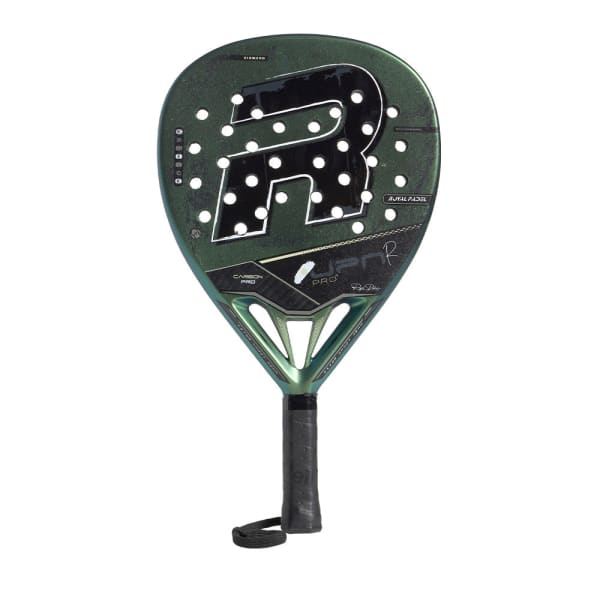
Royal Padel Japan Pro Green 2026
✓Cross-checked with official data from Royal Padelhow we score
PADELTESTLAB SCORE
0-100 scale
78/100
Price range
Description
Who this racket is for
Pros
- ✓The fibreglass face over a high-density polyethylene core delivers a surprisingly generous ball exit: defensive lobs reach the back wall and blocked volleys clear the net without needing extra arm speed. The sandpaper-like sandy finish bites into the ball on viboras and cut bandejas; deep kick serves and lifted balls jump off the court, and cut shots stay low. The head-heavy balance combined with the 38mm frame piles mass into the head, so smashes by 3 and flat smashes get their own momentum without forcing the swing. The high-density polyethylene cushions the impact and rebounds quickly, avoiding the harsh, vibration-heavy feedback typical of very stiff attacking rackets during long net sessions.
Cons
- ✗At 360-375g with a head-heavy balance, this racket demands early preparation: on reflex volleys at the feet or fast crosscourt balls, it arrives late if you don't anticipate. The sweet spot sits a touch high and shows little mercy on the lower part of the face — exactly where a rushed wall exit gets struck — costing you both ball and feel there. Fibreglass brings ball exit and power, not pinpoint precision; for short blocks and placing the ball at an opponent's feet, more controlled rackets do a better job. The 'advanced' tag isn't a marketing label: an intermediate player will be dragging this racket by the second set and won't get any benefit from the head-heavy balance.
PADELTESTLAB SCORE
0-100 scale
78/100
It is at its lowest price since we started tracking it: €255.95, down from €255.95. We began recording on August 9.
Prices collected on 31 days between August 9 and October 15
The Royal Padel Japan Pro Green 2026 comes in at 360-375 grams, with a 38mm frame, diamond shape, head-heavy balance, a fibreglass face with a sandy finish, and a high-density polyethylene core. On paper, it reads like a textbook attacking padel racket. On court, it has a nuance not every diamond shares.
It's the third colourway in the Japan Pro 2026 line — alongside the Blue and Red versions — and shares the same base build: identical shape, identical balance, identical 38mm profile.
Who should actually play with the Japan Pro Green 2026?
This one's for advanced players with solid technique and the physicality to swing 360-375 grams with the weight up top. It's a power padel racket through and through: it rewards players who smash by 3, close out at the net, and attack every high ball. A pure control player or anyone who takes the ball late will struggle with it.
Fibreglass and high-density polyethylene: where all that ball exit comes from
Fibreglass flexes more than a stiffer weave under the same impact. That extra deformation, paired with a high-density polyethylene core that snaps back instantly, returns energy into the shot instead of absorbing it.
The result is the standout trait of this racket: ball exit well beyond what you'd expect from a head-heavy diamond. The ball practically launches itself on defensive lobs and blocked volleys, with no need to add extra swing speed.
The 38mm frame backs up that equation. The wide profile spreads the impact and keeps the face stable on downward strokes — which is exactly where this racket lives.
The sandy finish isn't just for looks
That sandpaper-style surface grips the ball right on contact. In practical terms, that means three things:
- Viboras with real cut, staying low and opening up the court.
- Cut bandejas with extra bite that die before reaching the glass.
- Kick serves and topspin lobs with a higher, livelier bounce.
The trade-off is the one every textured face carries: it wears through balls faster and loses grit over hours of play.
Shot by shot: where it shines and where it costs you
Smash by 3 and flat smash. This is where this Royal Padel model lives. The head-heavy weight and 38mm profile do the acceleration for you: get into position, let the arm go, and the ball comes off with finishing speed.
Vibora and bandeja. The sandy grain and the higher sweet spot favour contact above shoulder height. The bandeja asks for a firm wrist, but comes out deep with minimal effort thanks to the core's ball exit.
Volleys. Strong on finishing volleys and blocked volleys. Weaker on reflex volleys at the feet, where the extra grams and head-heavy balance start to slow your reaction time.
Defence and wall exits. This is where the bill comes due. With the weight up top, you need to prepare earlier than usual; if the ball rushes you, the lob falls short and you hand over the net. On low balls tight to the glass, off-centre contact costs you a dead ball.
Tech specs
| Spec | Value |
|---|---|
| Shape | Diamond |
| Weight | 360-375 g |
| Balance | Head-heavy |
| Face | Fibreglass |
| Core | High-density polyethylene |
| Frame | 38 mm |
| Surface | Sandy (sandpaper-style) |
| Level | Advanced |
| Playstyle | Power |
What this racket won't forgive
Three honest limitations, ranked by importance.
First is maneuverability. At 360-375 grams with a head-heavy balance, this racket moves with real inertia — great for hitting hard, heavy for defending and for quick hands at the net.
Second is fine control. The combination of fibreglass and a fast-responding rubber gives you exit speed, but demands better touch when you need a short ball at an opponent's feet or a pinpoint dropshot.
Third is the hitting window. It's decent for a diamond shape, but not huge: contact low on the face loses ball speed and you'll feel it in your hand.
Ideal profile and who to pair it with
This suits a player who steps in to finish points rather than waiting for the sixth ball: a backhand that smashes by 3, vibora used as a transition shot, and aggressive volleys to close out points.
As a pairing, it works best alongside a more defensive partner running a manageable, medium-balance racket who can hold down the long rallies while this one gets saved for the high ball.
If you play most points from the back, waiting for your opponent's error, this racket works against you — it demands physical effort that doesn't translate into payoff.
Verdict: power with easy ball exit, not an easy racket to handle
The Royal Padel Japan Pro Green 2026 sits in the pro range and delivers on its spec sheet: an attacking diamond with a 38mm frame that hits with real inertia and, thanks to the fibreglass and high-density polyethylene, produces a ball exit that's unusually easy for its category.
The price you pay shows up in quick hands and defence. If your game is about finishing high and you've got the physicality for 375 grams, the trade-off works in your favour. If you're after ball direction and playing the long game, this isn't your racket.
In the brand's lineup
Within royal padel's lineup, the japan pro green sits at the premium tier starting at €255.95. It's a serious investment, but justified if you want top-tier materials and peak performance. At 78/100, it serves its purpose, though there are stronger alternatives on the market.
Frequently asked questions
Who is the Royal Padel Japan Pro Green 2026 for?
The Royal Padel Japan Pro Green 2026 targets advanced players. It needs consolidated technique and is not recommended for beginners.
How much does the Royal Padel Japan Pro Green 2026 weigh?
The Royal Padel Japan Pro Green 2026 weighs 360-375g according to the manufacturer's stated specs.
What's the Royal Padel Japan Pro Green 2026's PadelTestLab score?
The Royal Padel Japan Pro Green 2026 scores 78/100 in our review, based on power, hardness, control, maneuverability, ball exit, sweet spot and surface roughness.
How much does the Royal Padel Japan Pro Green 2026 cost?
Current price of the Royal Padel Japan Pro Green 2026 is 255.95€, comparing 1 shop in our finder.
Similar alternatives
Other rackets with a similar profile and price range: