Enebe Mustang Pro 15K
✓Cross-checked with official data from Enebehow we score
PADELTESTLAB SCORE
0-100 scale
82/100
Price range
Description
Who this racket is for
Pros
- ✓The matte 3D-textured face genuinely bites the ball — cut bandejas and lifted viboras get real kick that doesn't rely on wrist action alone The 15K Gold carbon face over the 38mm frame delivers a crisp, vibration-free response on the smash by 3, where the diamond shape stacks all the mass up top The medium-density Eva DSoft core holds up through long sessions without going soft, so the racket feels the same in the third set as it did in the warm-up The monoblock build spreads impact across the whole chassis, killing the dead spot at the handle-heart junction that usually punishes low volleys The hybrid teardrop-diamond profile softens ball exit slightly compared to a pure diamond, which pays off when you're blocking a return
Cons
- ✗The sweet spot is small and sits high up: any contact near the handle in a rushed defensive shot sends back a short ball that leaves you exposed At 360-370g with weight loaded in the head, the quick second volley in a net exchange arrives late unless you're set up before the bounce Ball exit is demanding: getting out of a low wall defense takes real arm and body commitment, the racket won't gift you depth on its own The firm feel of the Eva DSoft punishes the elbow if your contact technique isn't clean — this isn't a racket for coming back from injury
PADELTESTLAB SCORE
0-100 scale
82/100
It is down 36% from its highest price: from €264.95 to €170.69. Tracked since May 4.
Prices collected on 93 days between May 4 and October 15
Enebe Mustang Pro 15K review: the diamond padel racket that shows no mercy at mid-court
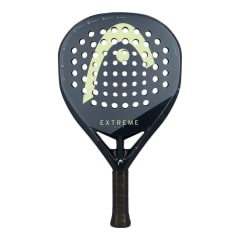
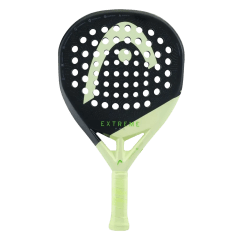
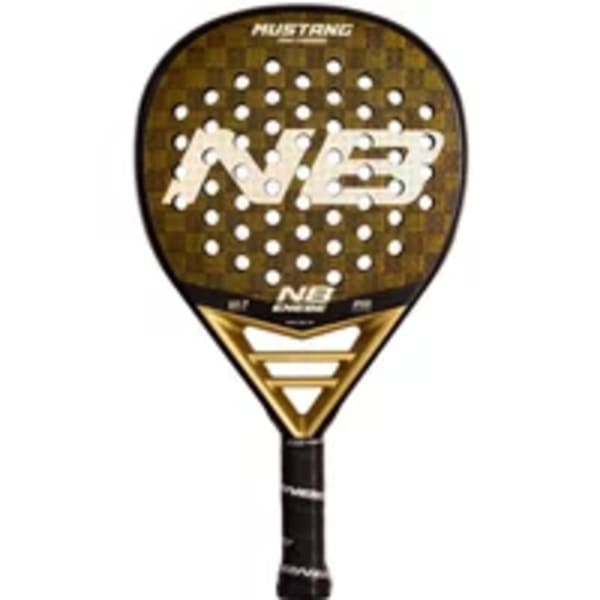
The Enebe Mustang Pro 15K is a diamond-shaped padel racket with a 15K Gold carbon face, Eva DSoft core and 38mm frame, weighing in between 360 and 370 grams. This is a pure attacking racket, built for advanced players who live at the net and close out points from above.
It's not a transition racket, and it's not a jack-of-all-trades. The rough 3D finish, the maximum-allowed profile and the mid-to-high balance add up to a very specific tool: one for the hitter who already knows exactly where the smash is going before they jump.
Who should actually play with the Enebe Mustang Pro 15K?
Advanced players, full stop. The combination of diamond shape, 15K carbon face and Eva DSoft core demands an arm speed that intermediate players simply don't have yet. With average technique, the ball comes out short and the elbow feels it. With solid technique, the diamond shape does exactly what it promises: it flattens everything.
The sweet spot sits high on the face, right where a well-set-up smash makes contact. Stray from that zone and the response drops off fast.
Enebe Mustang Pro 15K specs
| Spec | Value |
|---|---|
| Shape | Diamond |
| Level | Advanced |
| Playstyle | Power |
| Weight | 360-370 g |
| Balance | Medium |
| Face | 15K Gold Carbon |
| Core | Eva DSoft (medium density) |
| Frame | 38 mm |
| Surface | Rough, 3D finish |
15K Gold Carbon over Eva DSoft: what each layer brings
The 15K carbon face is what defines the feel. Carbon at that density barely flexes on contact, which translates into a crisp, dry response without the springy rebound you get from softer hitting surfaces. Hit it clean and the ball comes out fast and flat.
Underneath, the medium-density EVA rubber strikes the balance. Eva DSoft isn't a soft, cushy foam built for comfort — it's a firm, durable core that holds its properties session after session. That's its real strength: it doesn't go mushy halfway through the season, which is more than you can say for softer, more forgiving cores.
The 38mm frame, the maximum the rules allow, ties it all together. It adds structural rigidity to the chassis and lets the racket pack mass into the head without giving up on durability.
Monoblock construction — and why you feel it on the volley
The chassis is a single piece, with no join between the handle and the heart of the racket. That removes the flex point that, on traditional builds, creates a dead zone right above the grip.
Where does that show up? On tight low volleys close to the body and on blocked returns. Contact that would feel muted on other rackets here comes back with clear feedback on exactly where the ball hit.
Shot by shot: how it plays
- **Smash by 3 and flat smash**: this is home turf. The head-heavy mass and the stiffness of the 15K carbon build up late acceleration that drives the ball straight into the glass. Fast exit, flat trajectory.
- **Bandeja and vibora**: the 3D finish takes over here. The rough surface grips the ball enough to put real cut on the bandeja and real topspin on the vibora, without leaning entirely on wrist work.
- **Getting off the back wall**: demanding. Ball exit is limited and the balance doesn't help you lift from low. You need to commit arm, body and get the ball up high — try to let the racket do the work alone and it comes up short.
- **Defense and lobs**: this is where it costs you. The head-heavy weight forces earlier preparation than usual. Arrive late to a cross-court defensive shot and you're sending back a ball with no depth.
- **Fast net exchanges**: fine on the first volley, shaky on the second if the point speeds up at the net.
Diamond or hybrid? Where it really sits
The model lands on an interesting borderline. Its geometry leans hybrid — somewhere between teardrop and diamond — aimed at the offensive player chasing power without giving up on control entirely.
That means it forgives a little more than a full diamond on blocks and placed volleys, but it's still no defensive racket. The honest read: it gains a bit of manageability over a pure diamond, not enough to change what it fundamentally is.
Player profile and racket pairing
This Enebe model suits the backhand player who covers the whole court, or the drive hitter who closes points in two shots from the net. It demands good shoulder preparation and clean contact technique.
As a pairing, it works best alongside a partner running a more balanced racket that can hold up long rallies and defensive exchanges. Two diamonds on the same court leave too many gaps once the opponent starts lobbing.
I wouldn't recommend it to anyone coming back from an elbow or shoulder injury. The firm core feel and the stiffness of the 15K carbon send a lot of feedback straight up the arm, and that's a double-edged sword.
Verdict
The Mustang Pro 15K does exactly what it's built to do: smash. The 15K Gold carbon face with its 3D finish and the 38mm frame form a rigid, aggressive package with genuine bite on the ball, backed by an Eva DSoft core that holds up to heavy use.
The price you pay is demand. A small sweet spot, tight ball exit, and a clear penalty if you're a beat late to the ball. This is a racket that amplifies a player who already hits well — and exposes one who's still learning how.
In the brand's lineup
Within enebe's lineup, the mustang pro 15k occupies the mid-range starting at €170.69, offering highly competitive value for its segment. Its overall score of 82/100 places it among the best power rackets we've reviewed.
Frequently asked questions
Who is the Enebe Mustang Pro 15K for?
The Enebe Mustang Pro 15K targets advanced players. It needs consolidated technique and is not recommended for beginners.
How much does the Enebe Mustang Pro 15K weigh?
The Enebe Mustang Pro 15K weighs 360-370g according to the manufacturer's stated specs.
What's the Enebe Mustang Pro 15K's PadelTestLab score?
The Enebe Mustang Pro 15K scores 82/100 in our review, based on power, hardness, control, maneuverability, ball exit, sweet spot and surface roughness.
How much does the Enebe Mustang Pro 15K cost?
Current price of the Enebe Mustang Pro 15K is 170.69€ – 264.95€, comparing 4 shops in our finder.
Similar alternatives
Other rackets with a similar profile and price range: