Adidas Bisoke
✓Cross-checked with official data from Adidashow we score
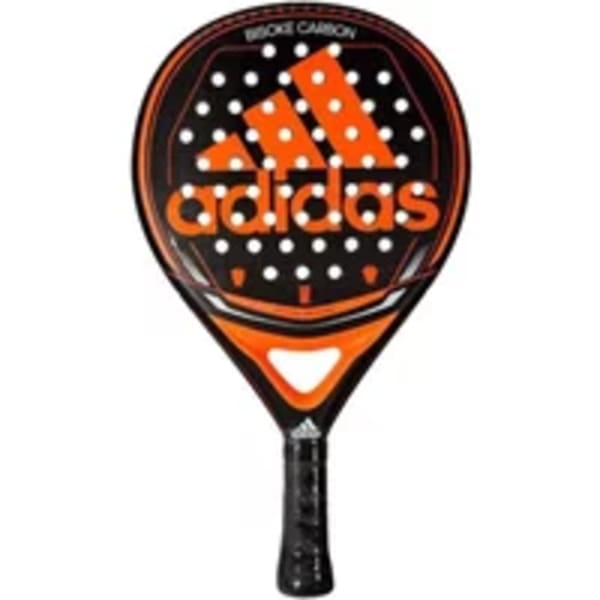
PADELTESTLAB SCORE
0-100 scale
77/100
Price range
Description
Who this racket is for
Pros
- ✓The Dual Exoskeleton reinforces both frame and core with a double layer of carbon, and that added stiffness shows up on the smash: it comes off the face flat and powerful, with the hitting surface barely flexing on contact The Soft Performance EVA cushions impact on a high-balance diamond, so the ball comes off with real carry on cut bandejas without needing a perfect strike to get it up and over At 485 cm², the hitting surface is generous for a diamond shape, which widens the margin for error on blocked volleys and rushed exits off the back wall The Spin Blade Octogonal on a sandpaper-style surface bites hard on víboras and topspin smashes, with grip you really feel on the kick serve into the glass The Power Embossed Ridge — a carbon rib running through the frame — keeps torsion in check on off-centre hits toward the tip, exactly where a diamond shape usually twists in your hand
Cons
- ✗The high balance and 360-375 g weight punish reactive defence: on fast balls at your feet you need to prepare early, or the racket simply arrives late
PADELTESTLAB SCORE
0-100 scale
77/100
Since May 4 it has ranged between €89.95 and €119.95. Today it sits at €119.95.
Prices collected on 78 days between May 4 and October 15
adidas Bisoke Review: An Oversize 485 cm² Diamond Racket With Dual Exoskeleton and a Soft Core
The adidas Bisoke solves a contradiction that's common in diamond-shape padel rackets: 360-375 g of weight and a high balance built for firepower, but paired with a Soft Performance EVA core instead of the hard rubber usually found in this category. A 6K carbon face, a 38 mm frame and a 485 cm² hitting surface round out a racket made in Spain, finished in black and orange.
Why Would a Power Racket Use a Soft Core?
A high-balance diamond concentrates mass toward the top of the face. That alone generates ball speed: when the sweet spot sits above the racket's centre, the extended lever arm does work that on a round shape you'd have to generate yourself with technique.
With raw power already baked into the geometry, adidas can afford to fit a softer core without losing pop. The Soft Performance EVA absorbs part of the impact and gives back a more generous ball exit than you'd expect from the shape on paper.
On court, that translates into something very tangible: the cut bandeja doesn't demand a flawless strike to lift the ball. On a diamond with a hard EVA core, a slightly mistimed bandeja falls short and leaves you exposed; here, the core forgives that half-a-centimetre of error.
Dual Exoskeleton vs Power Embossed Ridge: What Each One Actually Does
These are two separate reinforcements doing two separate jobs, and it's worth not mixing them up.
The Dual Exoskeleton applies a double layer of carbon across the frame and core. The effect is structural stiffness: the hitting surface deforms less on contact, so energy that isn't lost to flex goes straight back into the ball. It's most noticeable on the flat smash, where the racket responds crisp and clean with no parasitic rebound.
The Power Embossed Ridge is a carbon rib running the length of the frame, and it tackles a different issue: torsion. Every diamond shape wants to twist in your hand when you make contact near the tip or the upper sides — exactly where you tend to strike on a rushed smash. The rib keeps that twist under control and holds the face square.
The 38 mm frame and the Smart Holes Curve round out the package: that thicker profile provides the material depth needed to hold this whole structure together without flexing.
adidas Bisoke: Full Specs
| Spec | Detail |
|---|---|
| Shape | Diamond |
| Weight | 360-375 g |
| Balance | High |
| Face | 6K Carbon |
| Core | Soft Performance EVA |
| Frame | 38 mm |
| Hitting surface | 485 cm² |
| Surface texture | Sandpaper-style |
| Technologies | Dual Exoskeleton, Power Embossed Ridge, Spin Blade Octogonal, Smart Holes Curve |
| Level | Advanced |
Shot by Shot: Where the Bisoke Shines and Where It Struggles
Smash and flat overhead. This is its home turf. The combination of high balance and Dual Exoskeleton stiffness delivers pace without forcing your arm. The frame's rib keeps the face from twisting on hits toward the tip.
Víbora and topspin balls. The Spin Blade Octogonal on the sandpaper-style surface generates real friction. The víbora comes off with enough spin to kick away off the bounce, and the kick serve into the back glass really bites.
Blocked volley. This is where the 485 cm² hitting surface earns its oversize tag. A standard diamond punishes an off-centre volley hard; this wider face gives you room to block firm-wristed even when you don't catch it dead centre.
Wall exits. Works well if you prepare early. The soft core keeps the ball from dying on the face, but the weight up top needs time to load the swing.
Reactive defence. Its weak spot. On fast balls at your feet or lobs that crowd you, that high balance becomes a liability. If your opponent catches you out of position, this racket won't bail you out.
Who Is the adidas Bisoke Built For?
This is a racket for an advanced, attack-minded player with a trained arm. It calls for solid smash technique, the ability to prepare early, and enough physical stamina to carry 360-375 g with top-heavy mass through a full match.
The player who gets the most out of it ticks three boxes:
- **You live at the net and finish points up top.** If your game plan is to move forward, apply pressure and close out points with a smash or víbora, the high balance works for you on every point.
- **Your shoulder is conditioned for it.** A diamond shape at this weight punishes loose-armed technique or a dropped elbow.
- **You want soft feel over a dry, crisp response.** The Soft Performance EVA is what sets this adidas racket apart from a classic hard-core diamond; if you're chasing the crispest possible response, look elsewhere.
As a doubles pairing, it works best on the backhand side when your partner on the forehand plays a more control-and-placement game: the Bisoke brings the finishing smash while your partner sustains the rally.
Verdict: Accessible Power Within a Demanding Shape
The adidas Bisoke gets it right by not pushing the diamond shape to its extreme. A medium-to-large sweet spot sitting just above centre, combined with 485 cm² of hitting surface and that soft core, makes it noticeably more forgiving than the average racket in its class.
What it can't compensate for is the weight or the balance. A player who arrives late to the ball or struggles on defence will feel those 375 g in the closing stretch of a match, and no amount of material engineering fixes that.
If you play the backhand side, finish points up top, and want power without the harshness of a hard EVA core, this is a coherent, well-built option. If your game is built around blocking, playing off the walls and waiting for the opponent's error, a round shape will give you more pure control than this model.
In the brand's lineup
Within adidas's lineup, the bisoke occupies the mid-range starting at €119.95, offering highly competitive value for its segment. At 77/100, it serves its purpose, though there are stronger alternatives on the market.
Frequently asked questions
Who is the Adidas Bisoke for?
The Adidas Bisoke targets advanced players. It needs consolidated technique and is not recommended for beginners.
How much does the Adidas Bisoke weigh?
The Adidas Bisoke weighs 360-375g according to the manufacturer's stated specs.
What's the Adidas Bisoke's PadelTestLab score?
The Adidas Bisoke scores 77/100 in our review, based on power, hardness, control, maneuverability, ball exit, sweet spot and surface roughness.
How much does the Adidas Bisoke cost?
Current price of the Adidas Bisoke is 119.95€ – 132€, comparing 3 shops in our finder.
Similar alternatives
Other rackets with a similar profile and price range: